


THE PROJECT
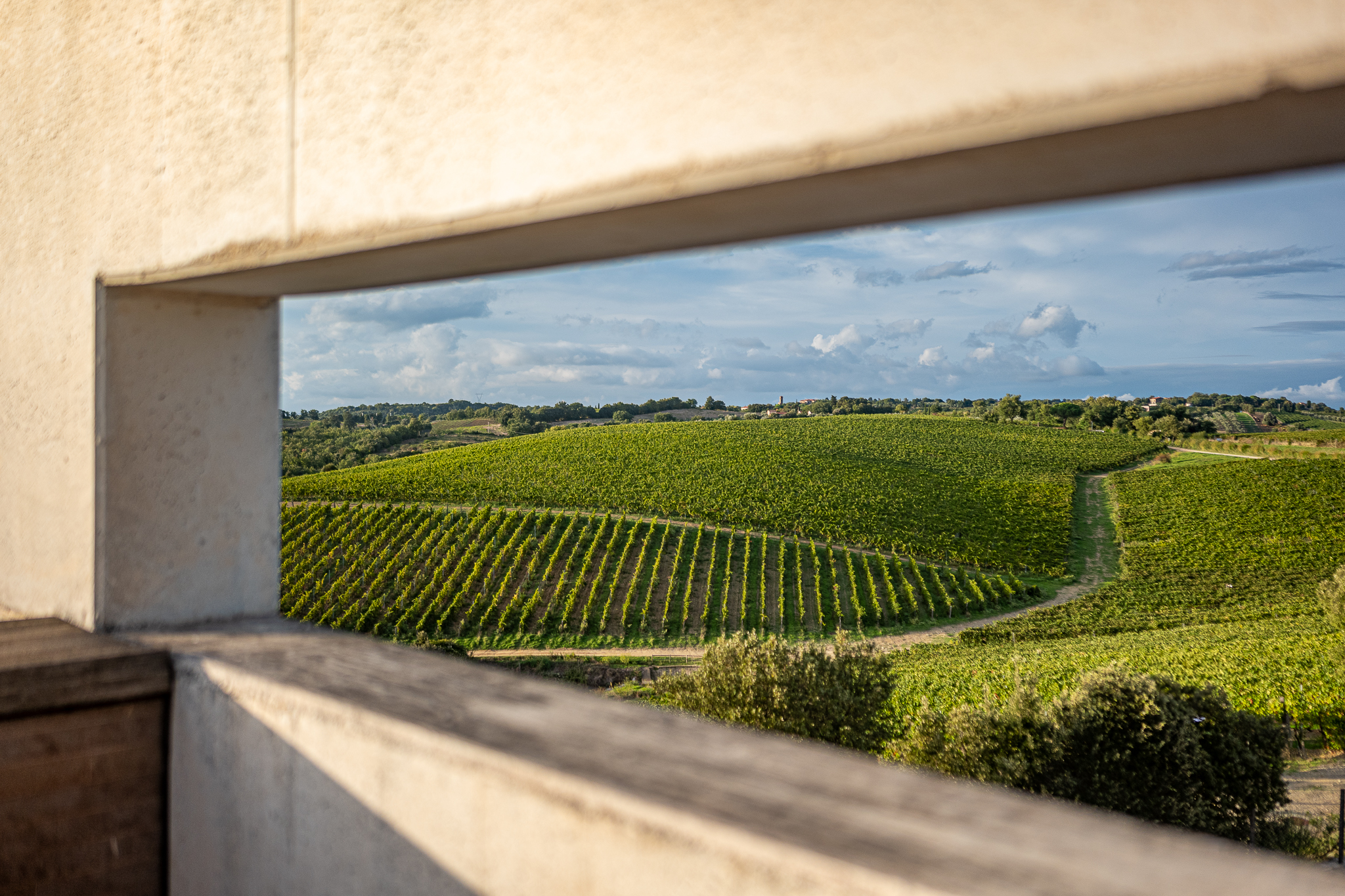
In 1998, the same year the Montecucco DOC was established, the Tipa-Bertarelli family chose this land to bring their vision to life: ColleMassari – a project rooted in landscape, research, and stewardship, where biodiversity could be cultivated, balance restored, and the genetic memory of Maremma’s Sangiovese carefully preserved.
From the first vineyard plantings to the massal selection of historic biotypes, and the gravity-flow cellar designed by Edoardo Milesi, every phase has been shaped to minimise intervention and honour the integrity of the raw material.
Today, the Tipa-Bertarelli family continues to believe in that design, and to grow it each day with the same farsighted spirit that inspired it.
TIMELINE
A PRIMORDIAL SANGIOVESE
ColleMassari is the guardian of an ancient viticultural heritage – a living genome of Maremma’s Sangiovese.
From the outset, the estate launched a research project to reconstruct the genetic memory of this variety’s historic biotypes, in collaboration with the Universities of Pisa and Florence.
The starting point was Poggio Lombrone: a vineyard planted over seventy years ago on sandstone soils. Here grow the estate’s oldest vines – some still ungrafted – which became the foundation for a meticulous programme of massal selection.
Fifteen distinct genetic families of Sangiovese were identified, catalogued, geolocated, and propagated in a reference vineyard through carefully selected cuttings. These were then replanted to create new vineyards – a process that has preserved the variety’s biodiversity and deepened the expression of its identity.
Beyond Poggio Lombrone, the estate also safeguards the lineage of four ultracentenarian, ungrafted Sangiovese vines from the province of Grosseto – living witnesses to a deeply rooted viticultural history.
THE CELLAR
At ColleMassari, following the logic of nature means listening closely, understanding its rhythms, and translating them into functional solutions. This biomimetic approach – where natural codes become guiding principles – informs not only viticulture, but also architecture.
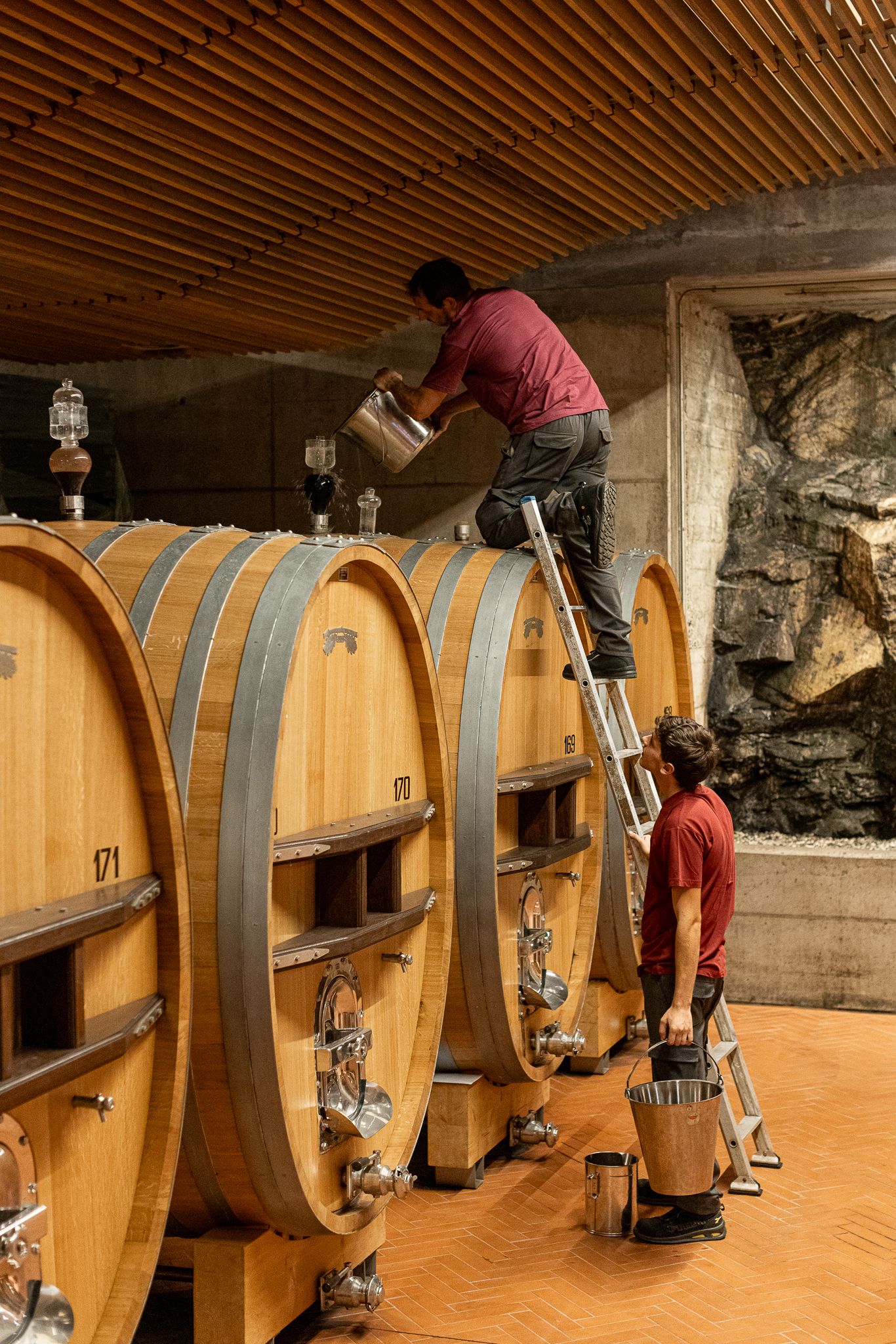
In 2002, architect Edoardo Milesi designed the cellar as an extension of the landscape, integrating it into the hillside. The structure unfolds across three levels, following the natural slope of the terrain, and enables gravity-flow vinification: the grapes move gently through each stage of the process, with minimal mechanical intervention.
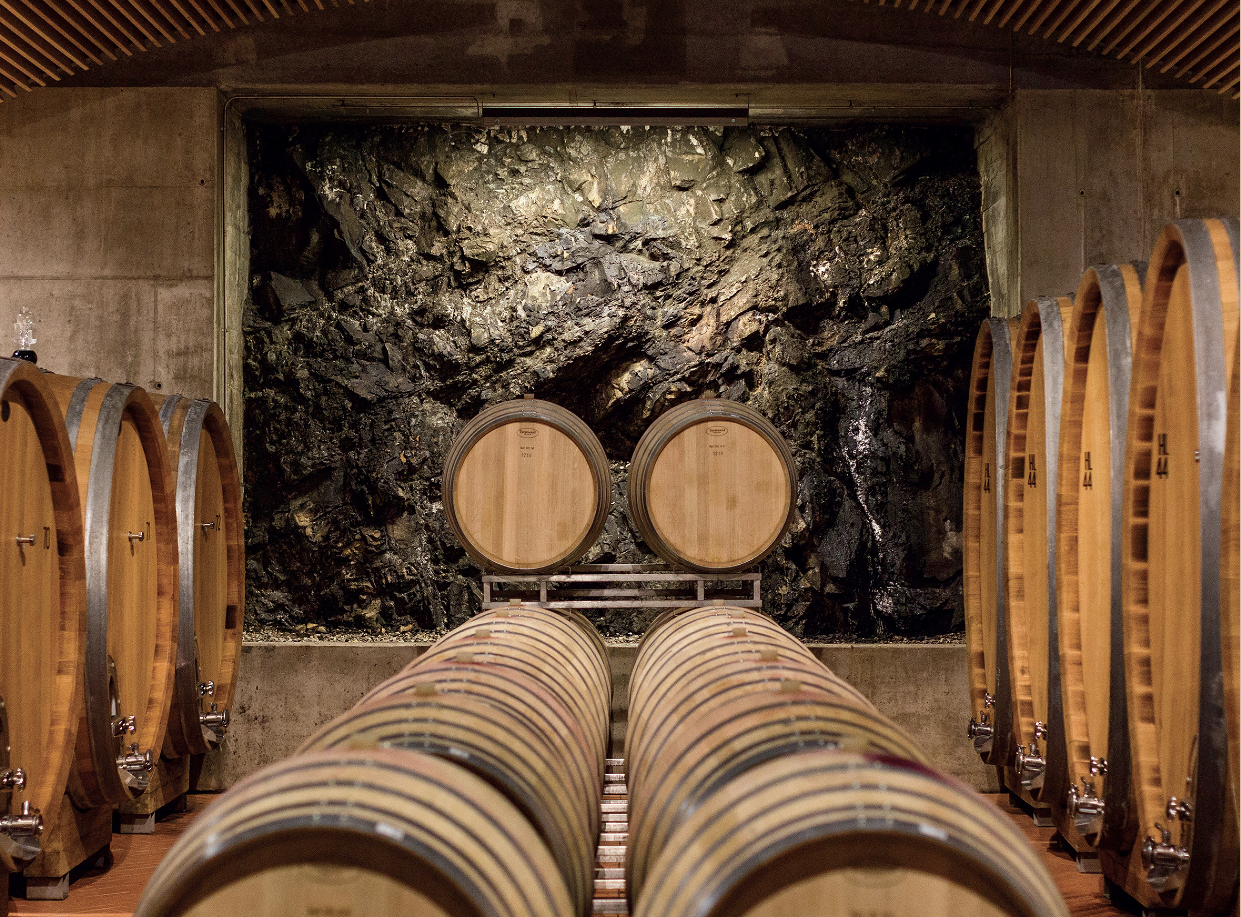
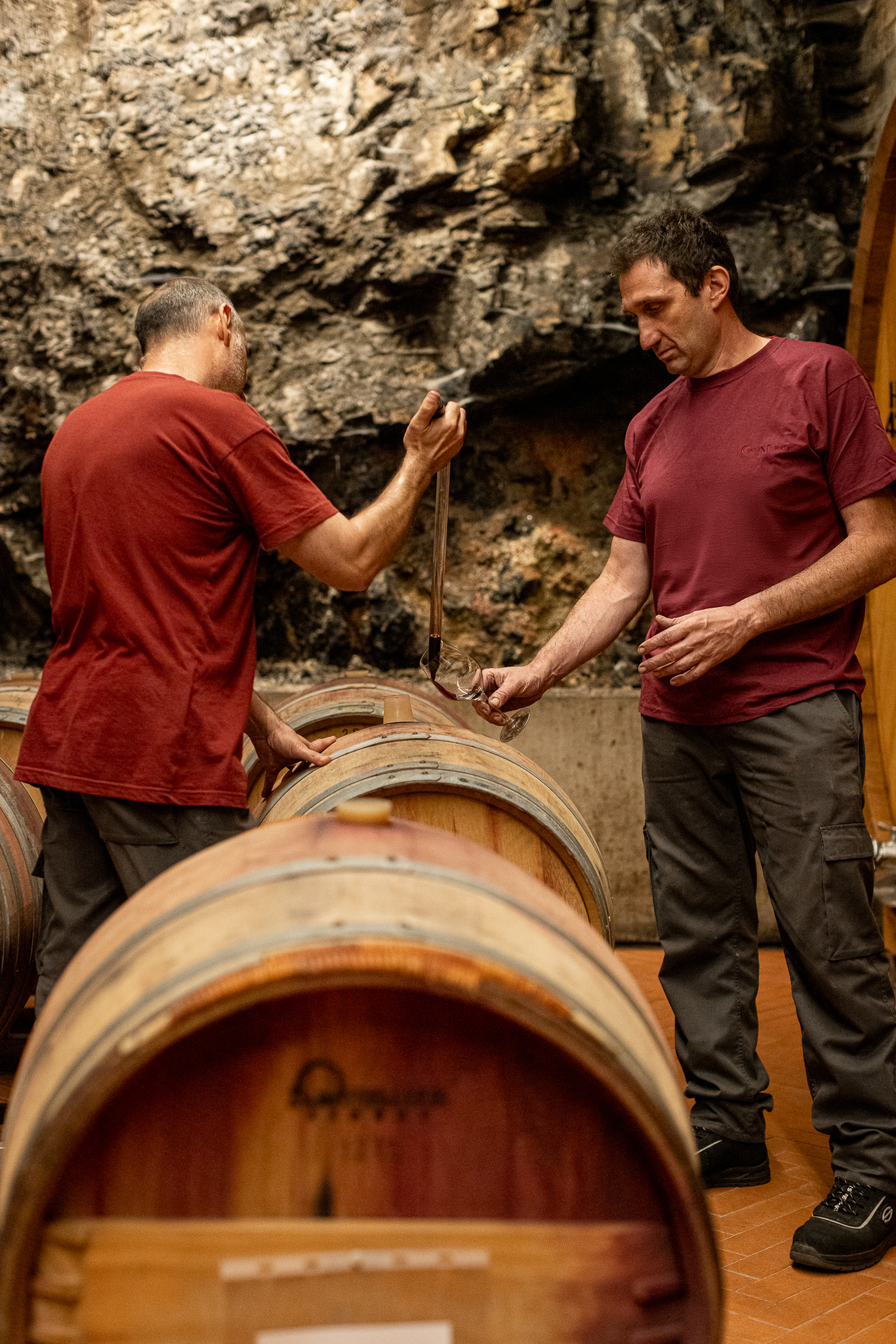
The ageing area, carved directly into the rock, harnesses the soil’s thermal inertia to maintain constant temperature and humidity throughout the year – naturally, and without artificial climate control.
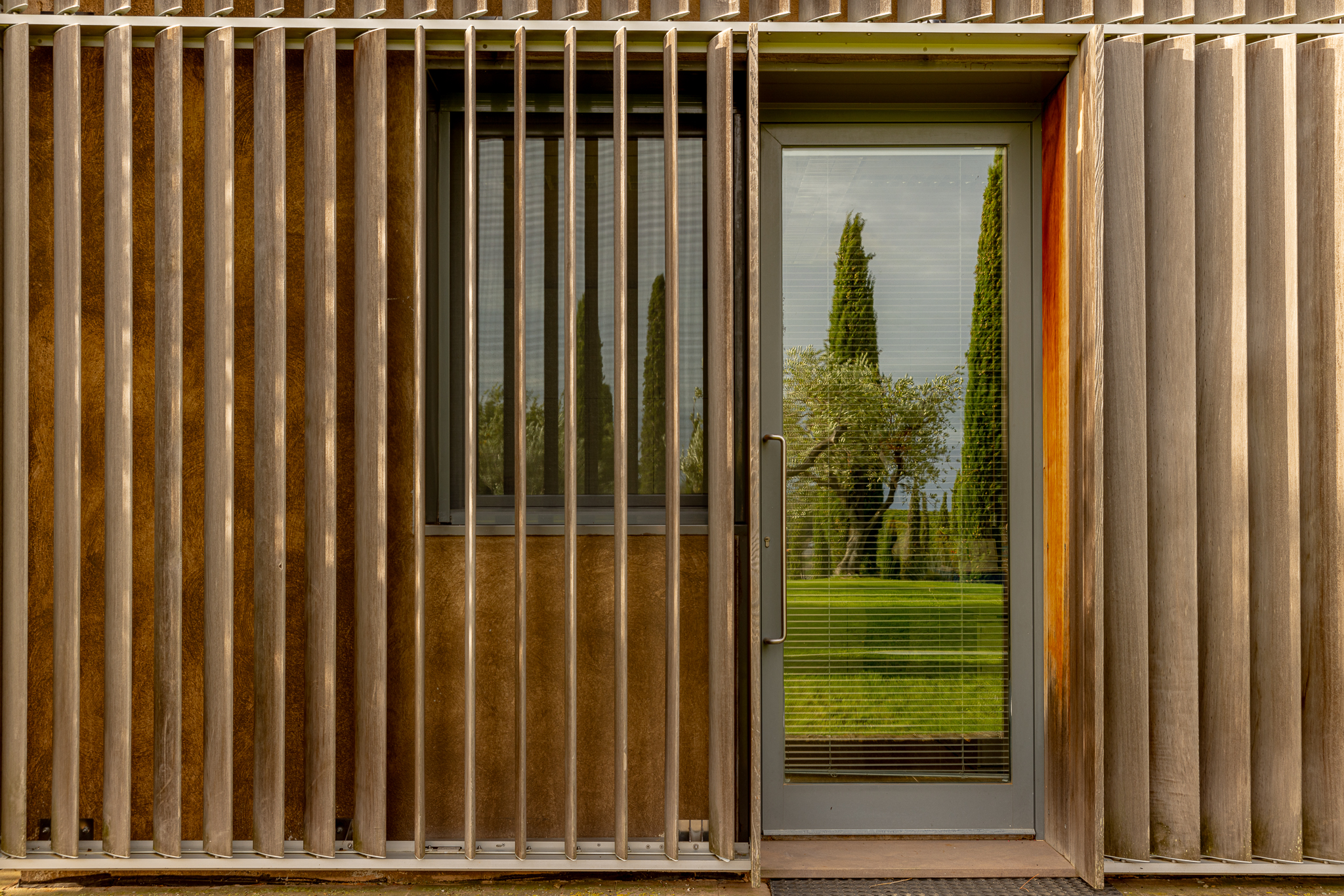
Every design detail reflects a vision of integrated sustainability: passive ventilation is achieved through aeration chimneys that self-regulate with the changing seasons; rainwater is collected and purified through a phytodepuration system, then returned to the agricultural cycle; materials such as cedarwood interiors and nitrogen conduits built into the handrails combine beauty, intelligence, and function – even acting as a natural antibacterial surface. The entire building is powered largely by solar energy.



CHIUDI