


THE ESTATE
ColleMassari is a fully integrated agricultural project – a place where nature and cultivation are brought into new balance, where the genetic imprint of a landscape meets the human responsibility to protect and renew it.
The estate functions as an open-air laboratory, where research informs every decision. Work centres on biodiversity, on the preservation of historic varieties, on nurturing the resilience of the vine – on a vision of sustainability as the foundation for the life of the landscape itself.
“In considering the study of physical phenomena […] we find its noblest and most important result to be a knowledge of the chain of connection, by which all natural forces are linked together, and made mutually dependent upon each other.”
– Alexander Von Humboldt
THE LANDSCAPE
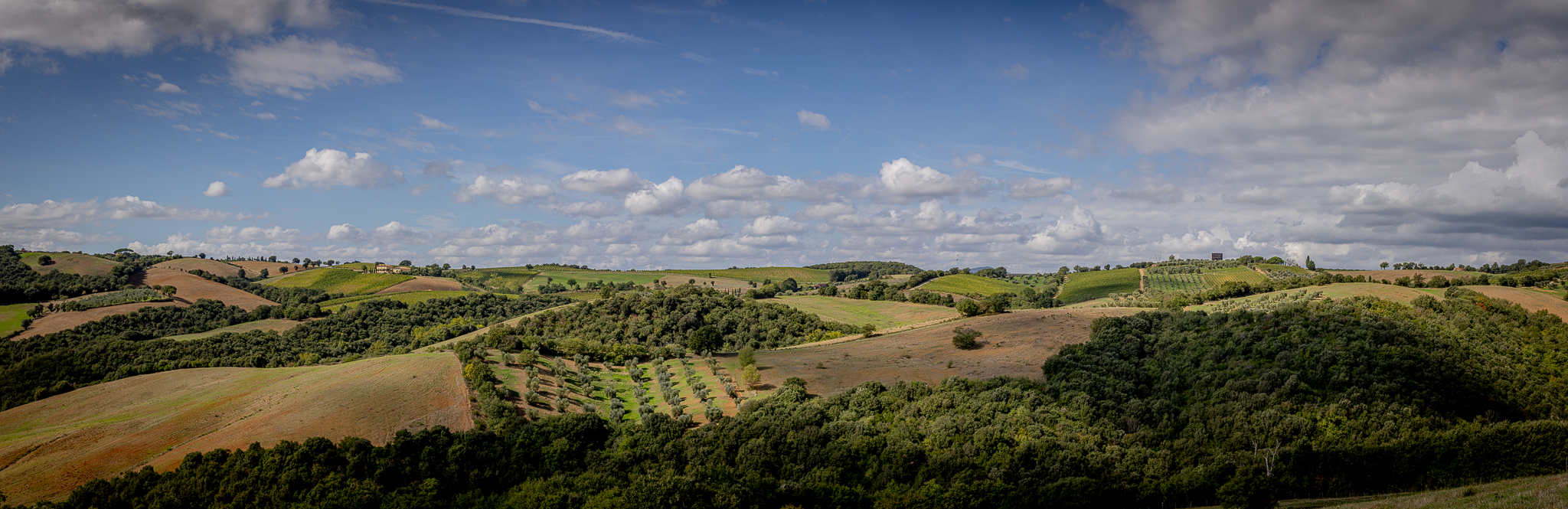
The Maremma is one of Tuscany’slast wild frontiers. From the Tyrrhenian coast to the silhouette of MonteAmiata, it stretches across an authentic, complex landscape of woodlands,rolling hills, and Mediterranean scrub, where the natural world still prevails.
A borderland shaped by ancientcivilizations, this is a place where agriculture first emerged in quietdialogue with the environment – slow, respectful, and attuned to the rhythms ofthe land.
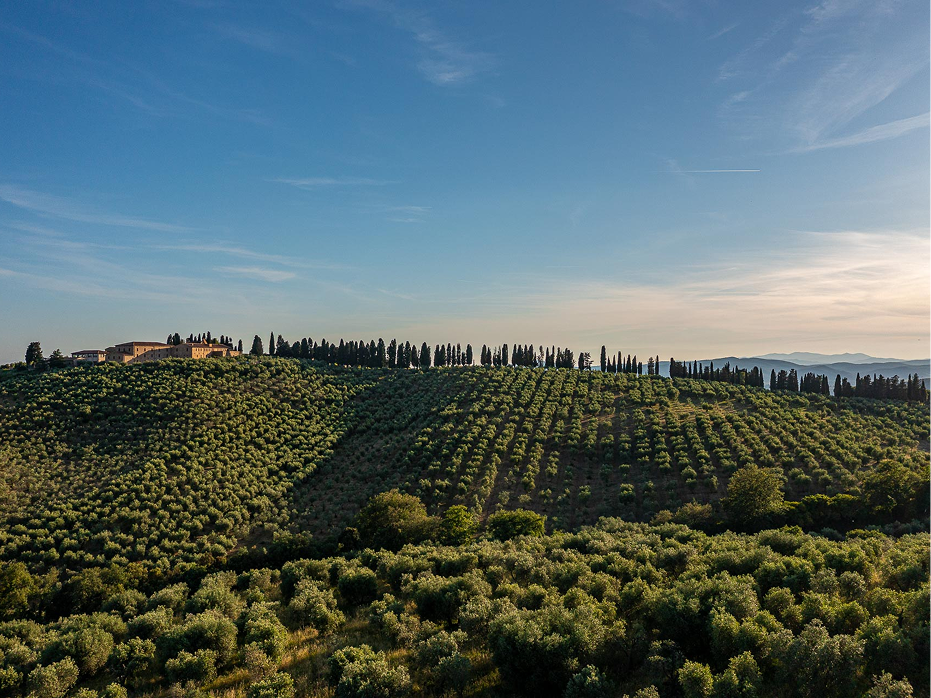
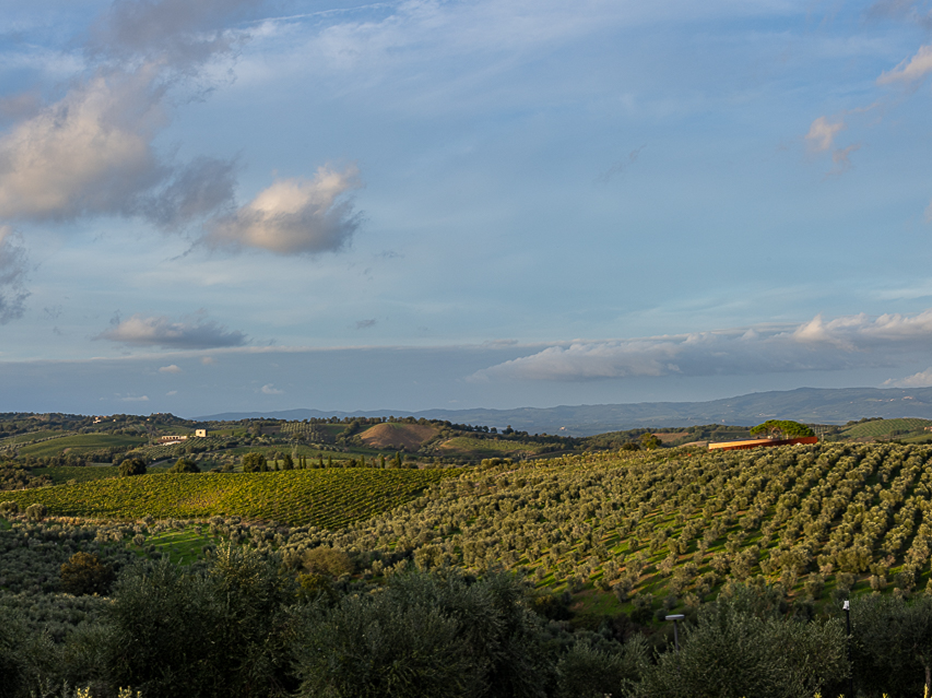
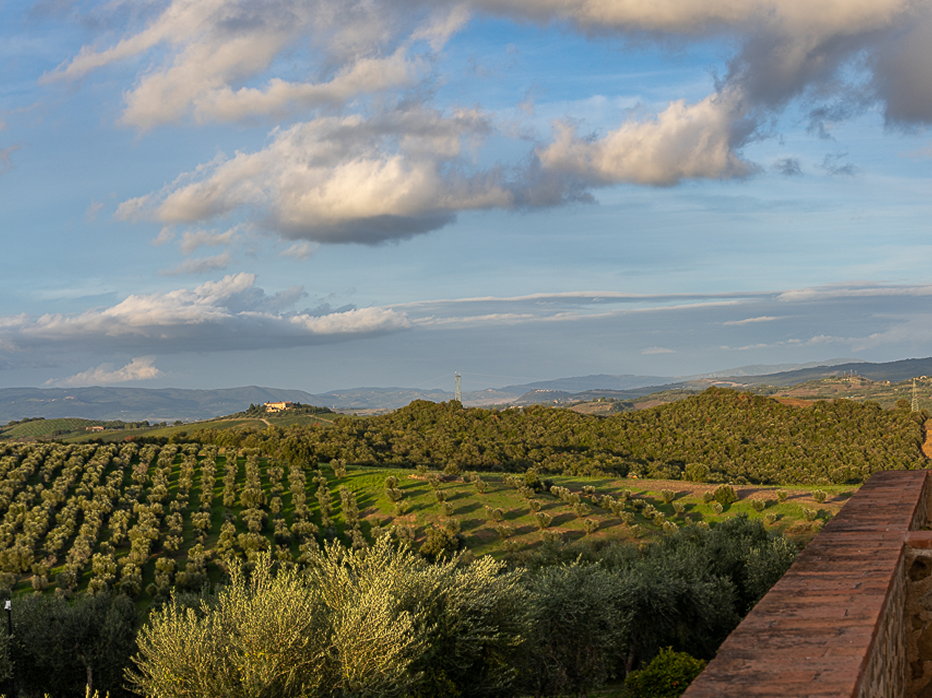
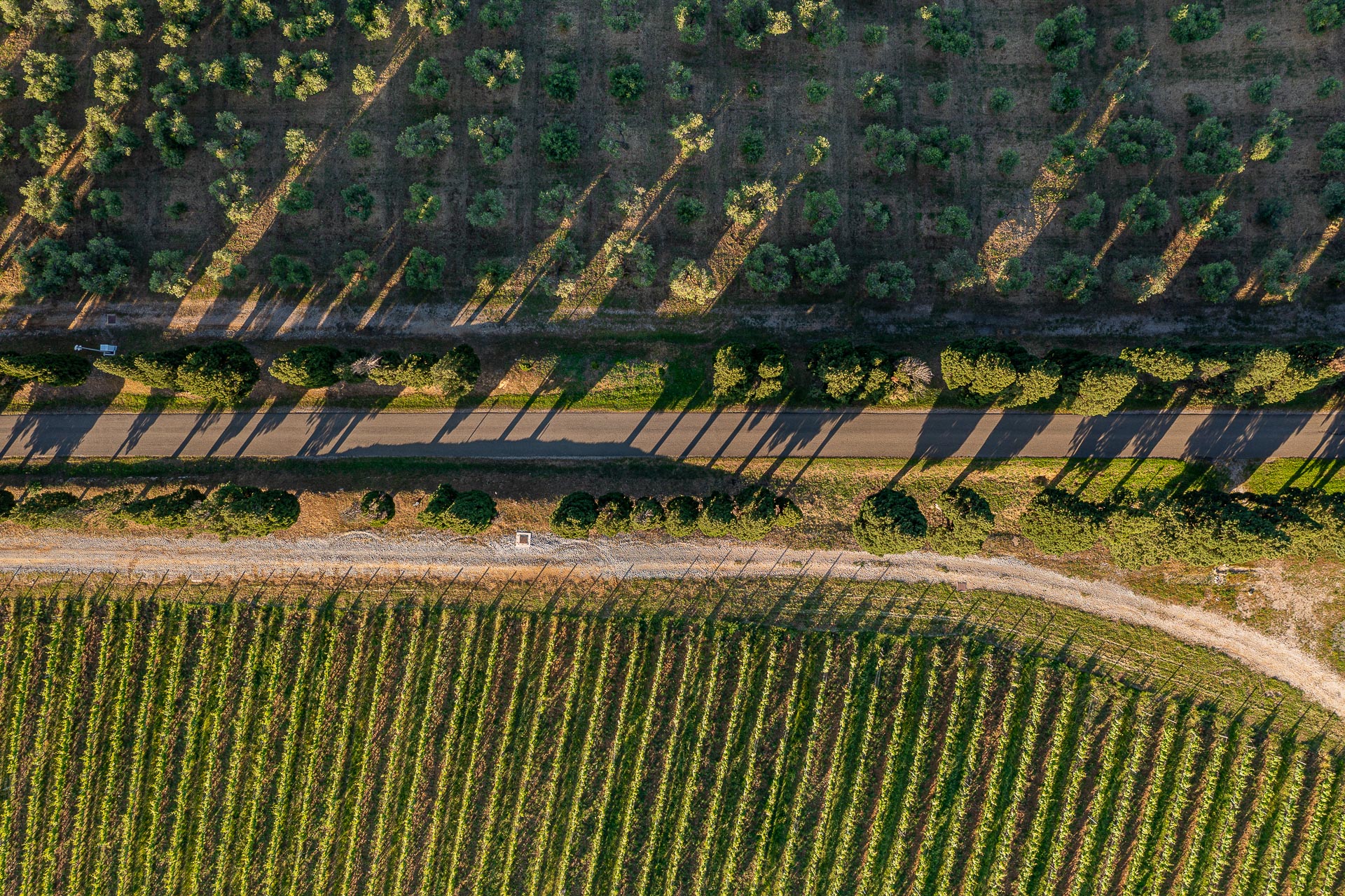
Just outside Cinigiano, in theheart of Montecucco, ColleMassari stands on a natural plateau encircled by 650hectares of woodland and olive groves. These protect and nourish the estate’s 115 hectares of vineyard – part of a 1,230-hectare project grounded insustainable, self-sufficient agriculture.
The forests regulatetemperature, protect the soils, and sustain biodiversity. The olive grovesinclude over 16,000 trees, from native cultivars to millenary wild olives. Roughly 400 hectares are devoted to arable crops, grown in long-cycle rotationswith ancient grains and legumes to enrich the soil and support food autonomy.
THE STRUCTURE
OF THE SOILS
At ColleMassari, the soil is the wine’s deepest voice.The estate rests on ageological history millions of years in the making: ancient seabeds, tectonicshifts, and volcanic transformations shaped by Monte Amiata. It’s a mosaic ofterroirs that gives each vine its character and complexity – with every singleparcel studied and tended with precision, thanks to continuous soil mapping.
Two-thirds of the vineyardsgrow on sandstone bedrock – a lean, well-drained soil that limits vigour andenhances aromatic finesse. Calcareous marl brings verticality and refinedtannins; sandy clay retains moisture and builds structure. Sedimentary rock, finally, addssalinity and depth.
THE VINEYARDS
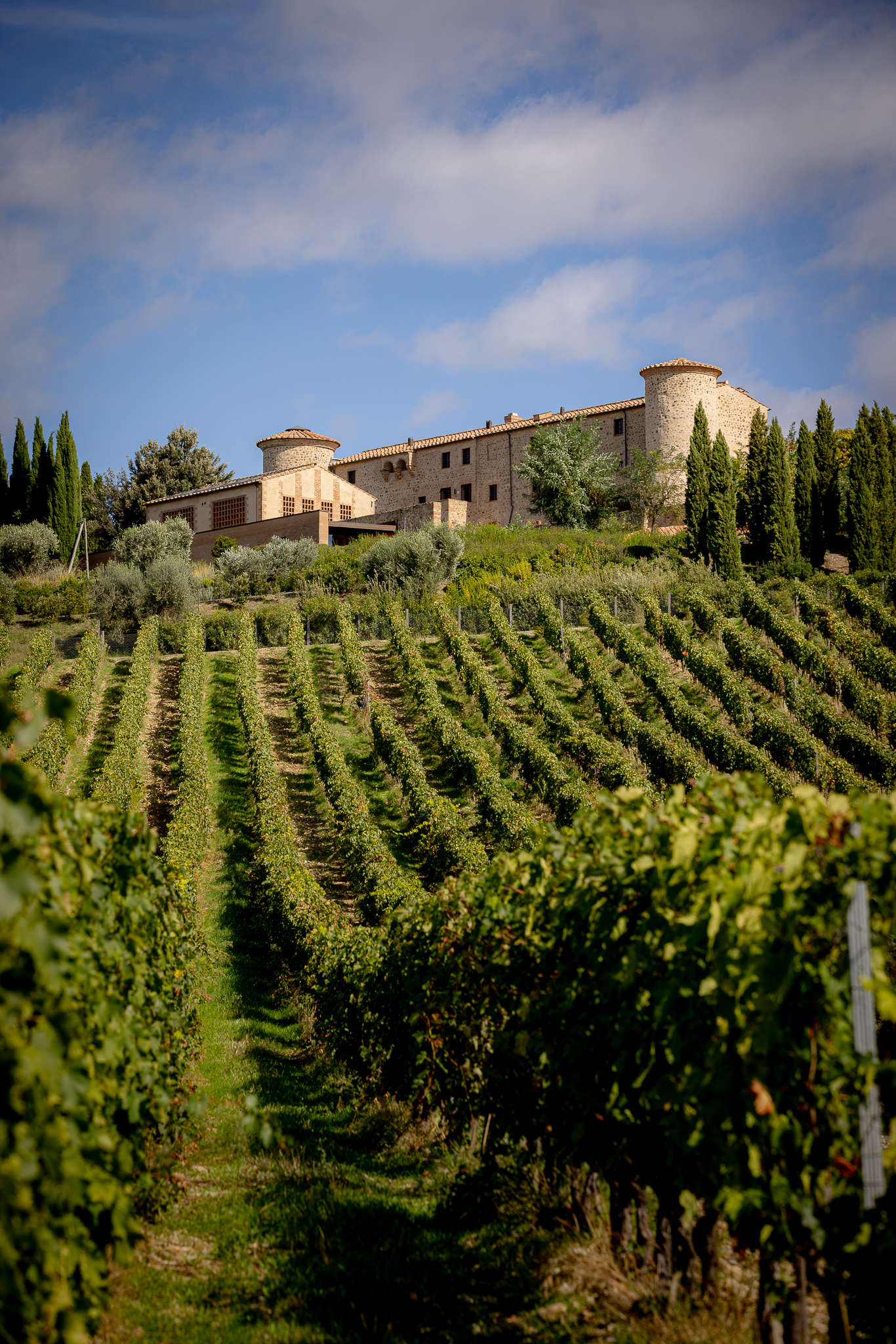
ColleMassari spans 115 hectaresof vineyard, all managed under certified organic practices. The vines grow on a naturalplateau at an altitude of 300–320 metres, facing the Tyrrhenian coast andsheltered by Monte Amiata. The surrounding landscape – woodlands, ridgelines,and natural terraces – regulates airflow, supports biodiversity, and creates astable microclimate, ideal for slow, balanced ripening.
Sangiovese is the leadingvariety at ColleMassari, covering 60% of the vineyard surface. Selected fromhistoric biotypes and adapted with the support of the Universities of Pisa andFlorence, it is the result of a long genetic research project that began overseventy years ago in the Poggio Lombrone vineyard. A living heritage, perfectlyin tune with the Montecucco terroir.
Alongside Sangiovese, othervarieties add depth and complexity: Ciliegiolo (9%), Montepulciano (6%), andCabernet Sauvignon (5%). Ciliegiolo, in particular, was rediscovered in theestate’s older plantings and valued for its natural synergy with Sangiovese.
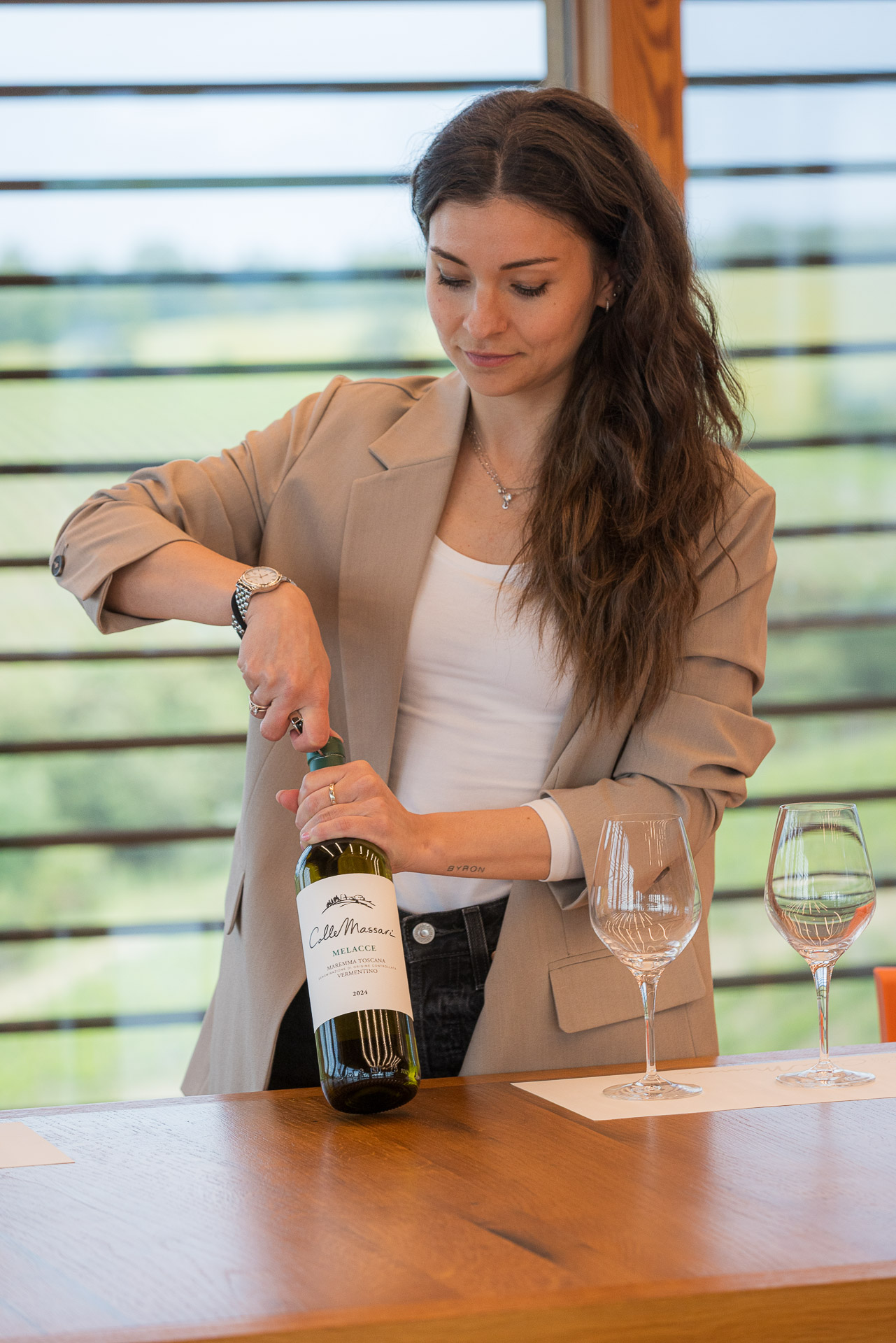
White varieties are planted incooler areas with south-west exposure. Vermentino represents 90% of the whitesurface, complemented by a small but significant parcel of Grechetto (10%).Vineyard management includes selective harvesting, gentle pressing, andtailored ageing to express the full nuance of each variety.
At ColleMassari, every vineyardis a world of its own – shaped by soil and by the nature of the terroir.


ENERGY, WATER AND SOIL
ColleMassari has been certifiedorganic since 2003, adopting practices that build soil fertility, fosterbiodiversity, and support agricultural self-sufficiency.
Part of the winery’s energy is generated by its own solar panels; rainwater is collected and treated using a constructed wetland system.
Some 650 hectares ofwoodland and Mediterranean scrub safeguard the microclimate, sustainbiodiversity, and regenerate the soil. An integrated system of hillside lakes,artesian wells, and phytodepuration helps maintain the water balance even during the driest periods.
A COLLECTIVE BALANCE
ColleMassari is an ecosystem ofnature, people, and knowledge in daily conversation. At ColleMassari,agriculture is treated as a cultural practice: one that is intentional and rooted in community. Every element – human or natural –contributes to a shared vision, where cultivation means care.
At the heart of this balanceare the people.
Giuliano Guerrini, long-timeagronomist and living memory of viticulture around Monte Amiata, has been partof the project since the very beginning. His perspective blends technicalskill, deep listening, and a profound understanding of the landscape.
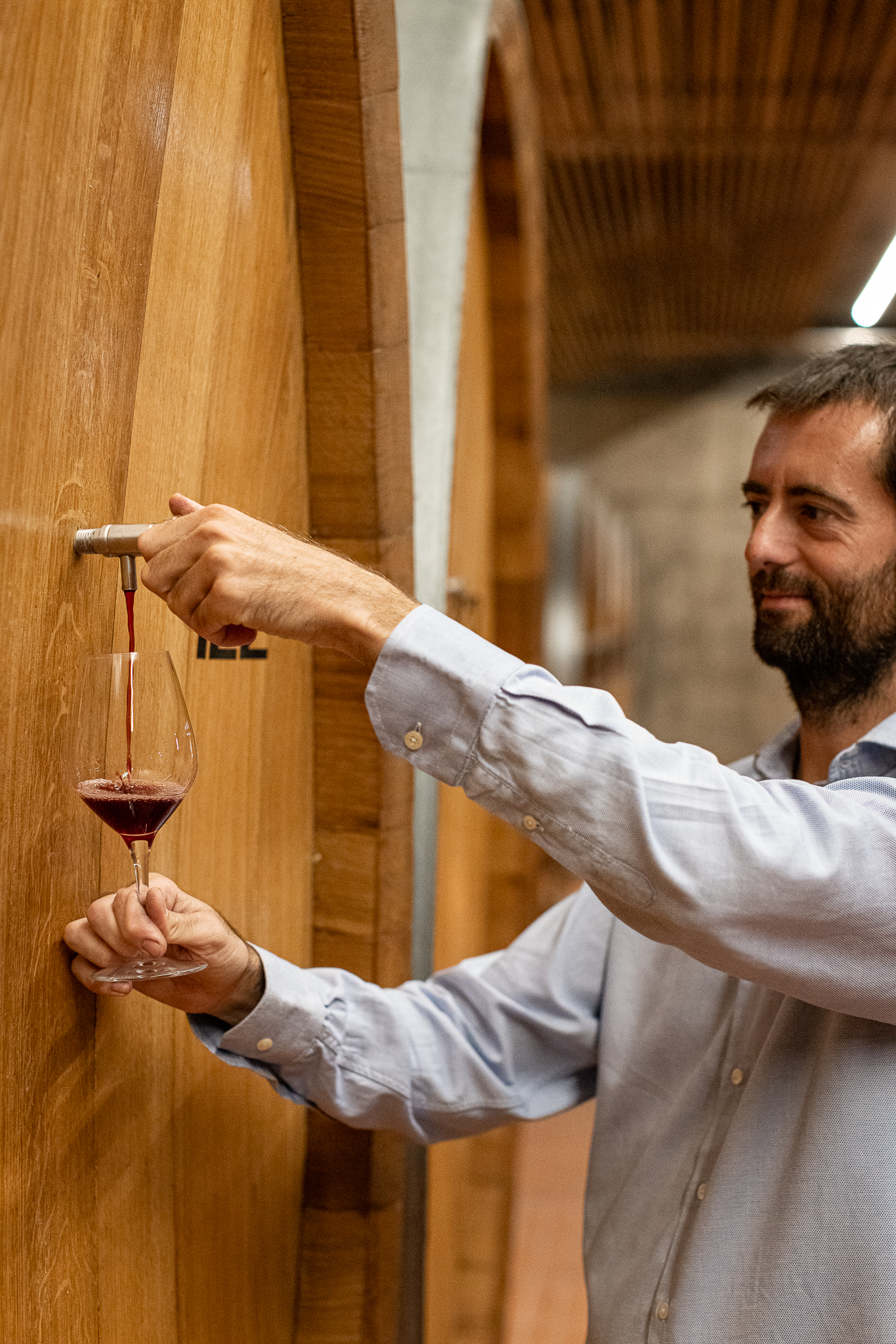
Giovanni Puccioni, winemaker since 2008, brings precision and intuition to eachharvest – embracing the differences in soil, exposure, and microclimate.Around them is a steady, deeplyrooted team – carrying a quiet, inherited knowledge born from daily connectionto the land. It’s thanks to this human capital that ColleMassari has built anagricultural model that is coherent, enduring, and replicable.
In 2024, this approach extendedbeyond the estate with the creation of the Montecucco Organic District,co-founded by ColleMassari.
Recognised by the Region of Tuscany, the district spans nearly 9,000 hectaresacross the provinces of Grosseto and Siena, with the municipality of Cinigianoat its centre. It is one of Italy’s first integrated agroecological initiatives– a collective effort that brings together farmers, institutions, associations,and local communities to build a healthier, more conscious agriculturallandscape.
Here, organic certification is not an end point, but a beginning – a foundation for rethinking the future ofthe land.







CHIUDI